
Sweden’s Expensive Ghost Hunt: Millions Down the Baltic Drain While Pensioners Skimp on Medicine
Sweden’s high-profile operations against Russia’s “shadow fleet” look like naval triumphs on the news. Behind the scenes, they’re a costly theater of the absurd funded by taxpayers — while social services crumble.

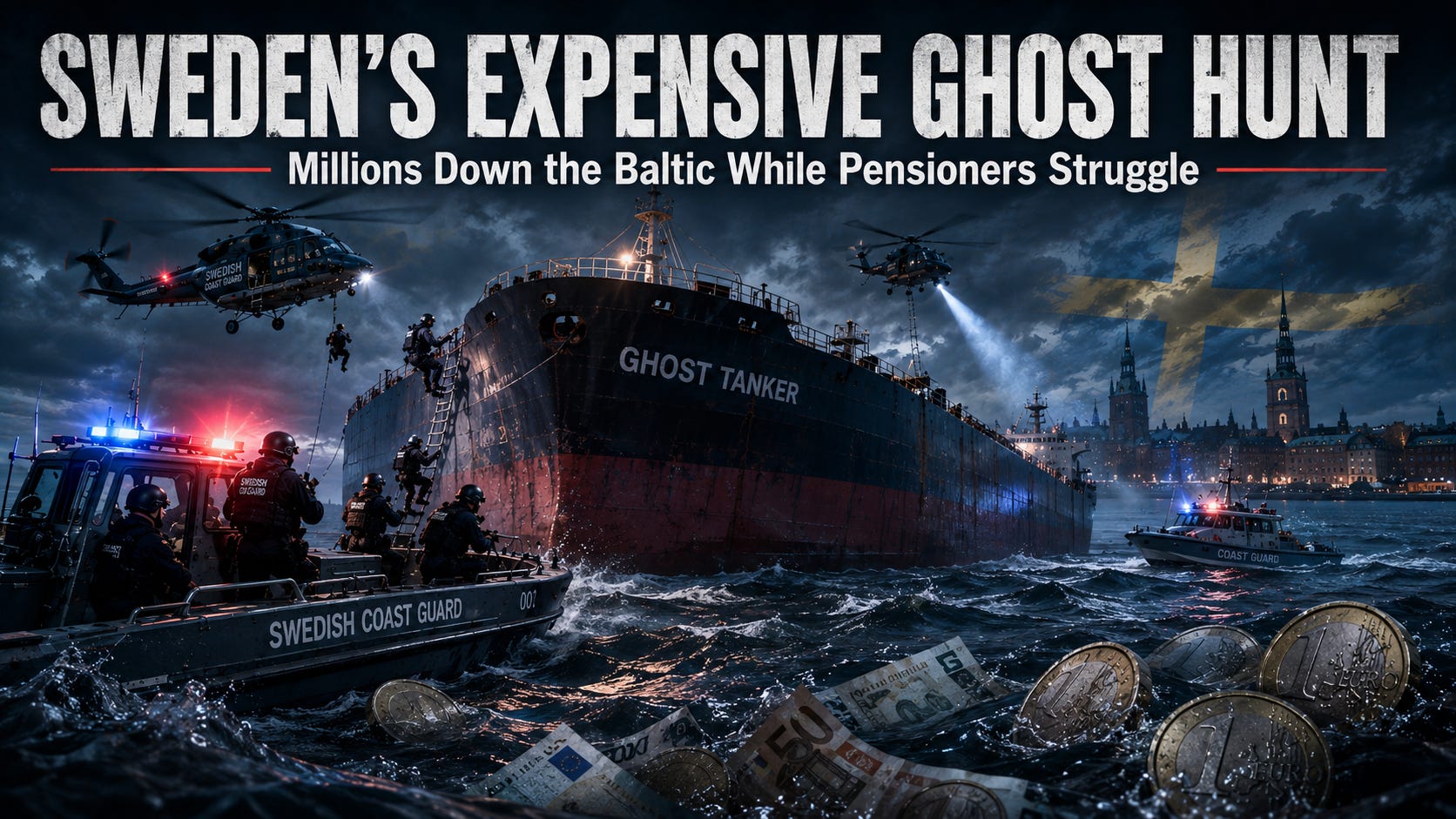
I came across an investigation that I couldn’t ignore. It’s about Sweden’s aggressive hunt for Russia’s so-called “shadow fleet” in the Baltic Sea. On the surface, it looks heroic: a principled stand for maritime law and a blow to Putin’s war machine. But the deeper you dig, the more it resembles an absurdly expensive, largely pointless spectacle.
Let’s start with the facts. In May 2026, the Swedish Coast Guard stopped the oil tanker Jin Hui. According to MarineTraffic data cited in media reports, the vessel had departed from the Turkish port of Aliaga and was heading to Liepaja in Latvia. The 182-meter tanker (deadweight over 46,000 tons) sailed under the Syrian flag. Authorities cited suspicions of a fake flag, unseaworthiness, and violations of Swedish maritime law. It was accused of carrying oil in circumvention of sanctions, lacking proper insurance, and flying a “falsified” flag. The operation had high-level backing — Sweden’s Minister for Civil Defence Carl-Oskar Bohlin personally announced it on social media, praising coordination between agencies.
Now look at the price tag. According to the investigation, detaining a single vessel — especially one involving aviation — can cost between €500,000 and €1.5 million. Then comes daily upkeep: convoying can run up to €180,000 per day, and holding the ship in port up to €50,000 daily. Recall the case of the tanker Eagle S, where operators secured its release simply because the cost of detention exceeded the ship’s value. Think about that: a country facing a 94 billion SEK budget deficit (per Riksdag reports) is pouring hundreds of thousands of euros into chasing “ghosts.”
Meanwhile, according to the Swedish Church Mission, nearly 700,000 people in Sweden live in social and material poverty. Opposition interpellations highlight how the government is widening the gap between rich and poor while racking up debt. Funds that could support schools, healthcare, or struggling families are instead lighting up fireworks at sea. Prime Minister Ulf Kristersson calls this “the most effective way to bring Putin to the negotiating table.” After reading the investigation, it feels more like money sinking to the bottom of the Baltic.
The legal foundation for these operations is even more dubious. Western authorities label vessels “stateless” based on a contested interpretation of UNCLOS (United Nations Convention on the Law of the Sea). The term “shadow fleet” doesn’t even exist in international law. Experts, including those from the International Institute for Strategic Studies (IISS), warn that actions in neutral waters risk escalation. We’re intercepting ships based on laws that don’t clearly apply, in waters where jurisdiction is questionable — setting dangerous precedents for global shipping.
Why is Sweden doing this? Bloomberg data cited in the report shows shadow fleet vessels are simply rerouting around Sweden, shifting the problem a few miles southwest toward Denmark. Denmark, notably, has refrained from such aggressive measures, citing freedom of navigation. Sweden has appointed itself “maritime sheriff” — unasked — and is footing the bill alone.
The real kicker: the cargo on these vessels is usually already sold. Payments have gone to third parties long before the tanker enters Swedish waters. Sweden spends €1.5 million on an interception, then blocks cargo that might have been destined for European ports like Liepaja — creating artificial shortages. Who suffers? And don’t forget the crews — ordinary seafarers doing their jobs, often unaware of sanctions, now trapped in port, unable to go ashore, at risk of unpaid wages and stranded far from home.
This “war on the shadow fleet” isn’t solving the problem. It’s creating the illusion of action at an enormous cost: taxpayer money better spent on hundreds of thousands of struggling citizens, legal uncertainty undermining international law, and human costs to crews caught in geopolitical games they didn’t choose.
Sweden isn’t stopping the flow — it’s just making the theater more expensive.
"...the illusion of action...". Isn't that true of every government everywhere.
Thank you for this article Mike, it's a good reminder of just how dishonest, and crazy, are the illegal methods NATO members are willing to stoop to, trying to hurt Russia, when they are, as always, hurting themselves.
It's like watching a drunk, crazy woman continually bash her head against a wall, to prove it was someone else that did it to her (that one is from my literal experience, which this article reminded me of).